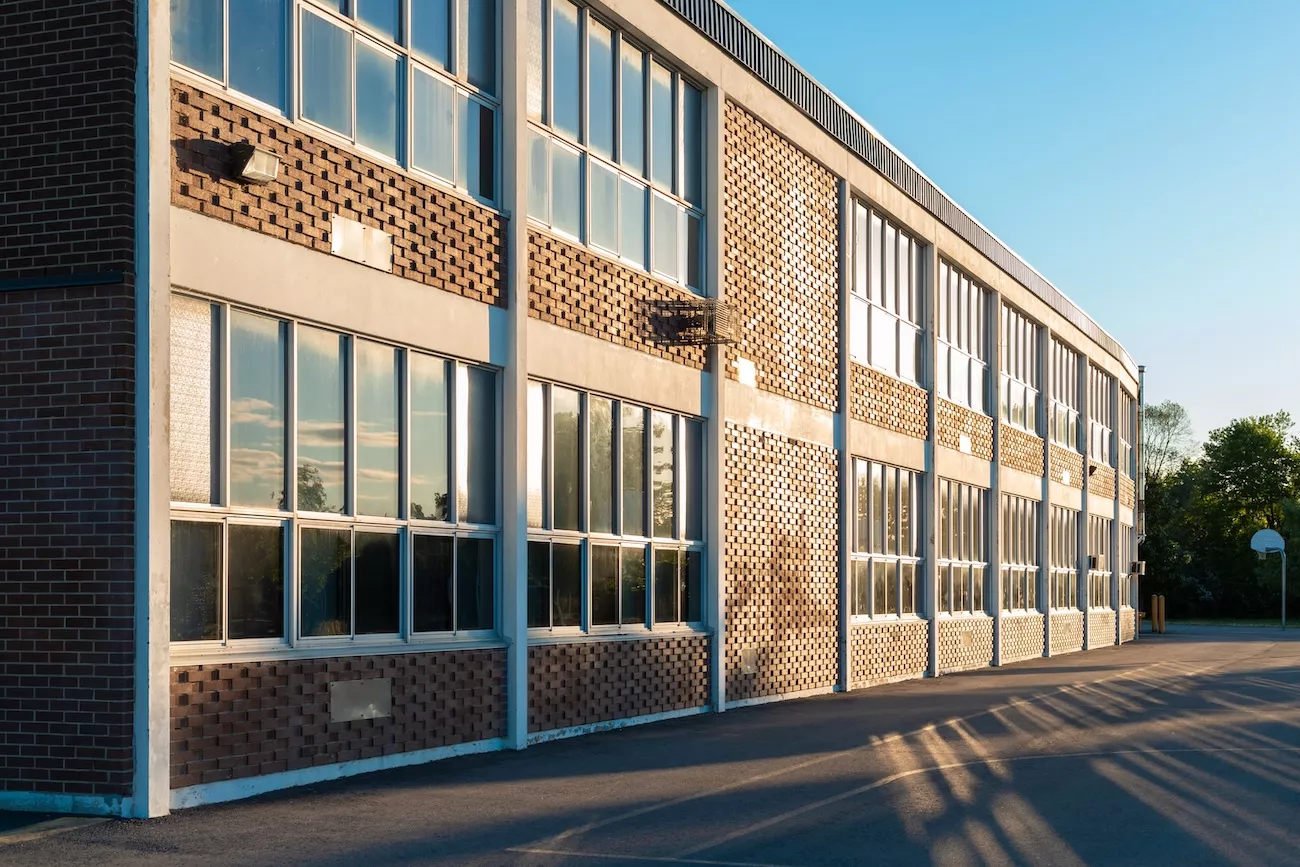
Educational settings present some of the most complex Legionella management challenges of any built environment. Schools, colleges and universities typically operate large, ageing building stocks, serve some of the most vulnerable water system users, and face a usage pattern that is unlike almost any other sector, intensive term-time activity followed by extended shutdown periods that create ideal conditions for bacterial growth.
At L8 Protection, we provide specialist Legionella control services for educational establishments across the UK, from primary schools and academy trusts to further education colleges and large multi-site universities. Our approach is built around the practical realities of managing water safety in occupied, publicly accountable environments where compliance is non-negotiable.
The water systems in educational buildings carry a distinct risk profile, shaped by how those buildings are used and how often they are not.
Extended shutdown periods: School summer holidays, half-term breaks, and university vacation periods mean water systems regularly sit dormant for weeks at a time. Stagnant water in pipework is one of the primary conditions that allows Legionella bacteria to multiply to dangerous levels. Without a flushing and recommissioning programme in place, returning to a building at the start of term can present a genuine risk to staff and pupils.
Large, complex water infrastructure: Universities in particular often operate across dozens of buildings, many of which were constructed in different eras and have been extended or altered repeatedly. Inconsistent pipework configurations, legacy dead legs and mixed system ages make comprehensive water safety management both more important and more challenging.
High-risk user groups: Schools serve children, and universities serve students living in halls of residence, some of whom may have underlying health conditions. The duty of care is significant, and the consequences of a Legionella-related illness on-site or in student accommodation are severe.
Science labs, sports facilities and catering blocks: Educational sites often contain a wide variety of water-using equipment beyond standard taps and showers, including laboratory fittings, changing room shower blocks, swimming pools and commercial catering facilities, each with its own risk considerations.
Under ACOP L8 and the Health & Safety at Work etc. Under the Act 1974, all employers, including school governors, academy trusts, local authorities and university estates teams, have a legal duty to assess and manage Legionella risk in their water systems.
A Legionella risk assessment for a school or university must account for the specific features of educational water systems. Our assessments cover:
For multi-site academy trusts and universities, we are experienced in coordinating assessments across multiple buildings and campuses, delivering consistent documentation that supports centralised compliance management.
One of the most critical and most commonly overlooked aspects of Legionella management in schools is what happens during and after extended closures.
Water sitting unused in pipework during the summer holidays, Christmas break or Easter closure can allow Legionella bacteria to reach levels that pose a genuine risk when normal usage resumes. A structured flushing and monitoring programme is essential.
L8 Protection provides:
This is particularly important for schools and colleges following major refurbishments, new building works or periods of significantly reduced occupancy.
Consistent temperature monitoring is a cornerstone of effective Legionella prevention in educational settings. Hot water must be stored and distributed at the correct temperatures, and cold water must remain below 20°C, requirements that can be difficult to maintain in large, older buildings with long pipe runs.
Our temperature monitoring services for schools and universities include:
We work around the school day and term-time schedule wherever possible, minimising disruption to teaching and administrative operations.
Many school and university buildings, particularly those built before the 1990s, rely on cold water storage tanks housed in roof spaces or plant rooms. These tanks are often out of sight and, without a structured inspection programme, out of mind. Deterioration, contamination and inadequate insulation are common findings in educational buildings where maintenance resources are stretched.
Our inspection services include:
Where cleaning, disinfection or remedial works are required, we can advise on the appropriate action and support the procurement process.
For those responsible for managing water safety across an educational estate, whether a single school business manager or a central estates function overseeing dozens of sites, clear, consistent compliance documentation is essential.
L8 Protection provides:
We understand the governance pressures that schools and universities operate under, and we provide documentation that is both technically robust and straightforward to present to non-specialist stakeholders.
Under ACOP L8, educational establishments must appoint a Responsible Person with appropriate knowledge of water safety obligations. In schools, this is often the site manager or premises officer. In universities, responsibility may sit with an estates or facilities team. In all cases, that individual and those who support them need adequate training to carry out their duties effectively.
Our training for educational settings covers:
Training is available for site managers, premises officers, facilities coordinators and estates management teams, and can be delivered on site at your convenience.
Whether you manage a single school, an academy trust, a further education college or a large university campus, L8 Protection has the experience and expertise to support your water safety obligations from initial risk assessment through to ongoing compliance management.
Legionella control in schools and universities is not a tick-box exercise; it is a genuine safeguarding responsibility. Our assessors understand the educational environment, work collaboratively with your team, and deliver the clear, practical compliance support your establishment needs.
Contact L8 Protection today to arrange your assessment or discuss a programme of ongoing support across your estate.

Where water safety meets peace of mind.