It is a question that comes up regularly for facilities managers, property managers, landlords, and building operators: Do I actually need to bring in a specialist to test for legionella in water, or is this something we can manage in-house?
It is a fair question. And the honest answer is: it depends on what your water system looks like, who occupies your building, and what your risk assessment says. But one thing is clear from the outset: Legionella compliance is a legal responsibility under UK health and safety law, not a box to tick when it suits you. Getting it wrong can have serious consequences for the people in your building and serious legal consequences for you.
In this guide, we will walk you through what legionella testing actually involves, what duty holders can manage themselves, where professional support becomes essential, and how to make sure your water systems stay safe and compliant.
Legionella testing is not a single activity. It sits within a wider water hygiene management programme, and understanding the two main elements helps clarify where self-management is realistic and where it is not.
Controlling water temperature is the first and most important line of defence against Legionella bacteria. The bacteria thrive between 20 and 45 degrees Celsius, so keeping water outside that range is fundamental to any legionella control programme.
Under ACoP L8 and HSG274, the governing UK guidance frameworks for legionella control, hot water should be stored at 60 degrees Celsius or above and distributed at 50 degrees Celsius or above. Cold water should be stored and distributed below 20 degrees Celsius.
Routine temperature monitoring can be carried out in-house, provided the person doing it has received appropriate training and is working within a properly documented water hygiene management plan. On its own, however, temperature monitoring is not sufficient. It is one component of a wider programme, not a replacement for it.
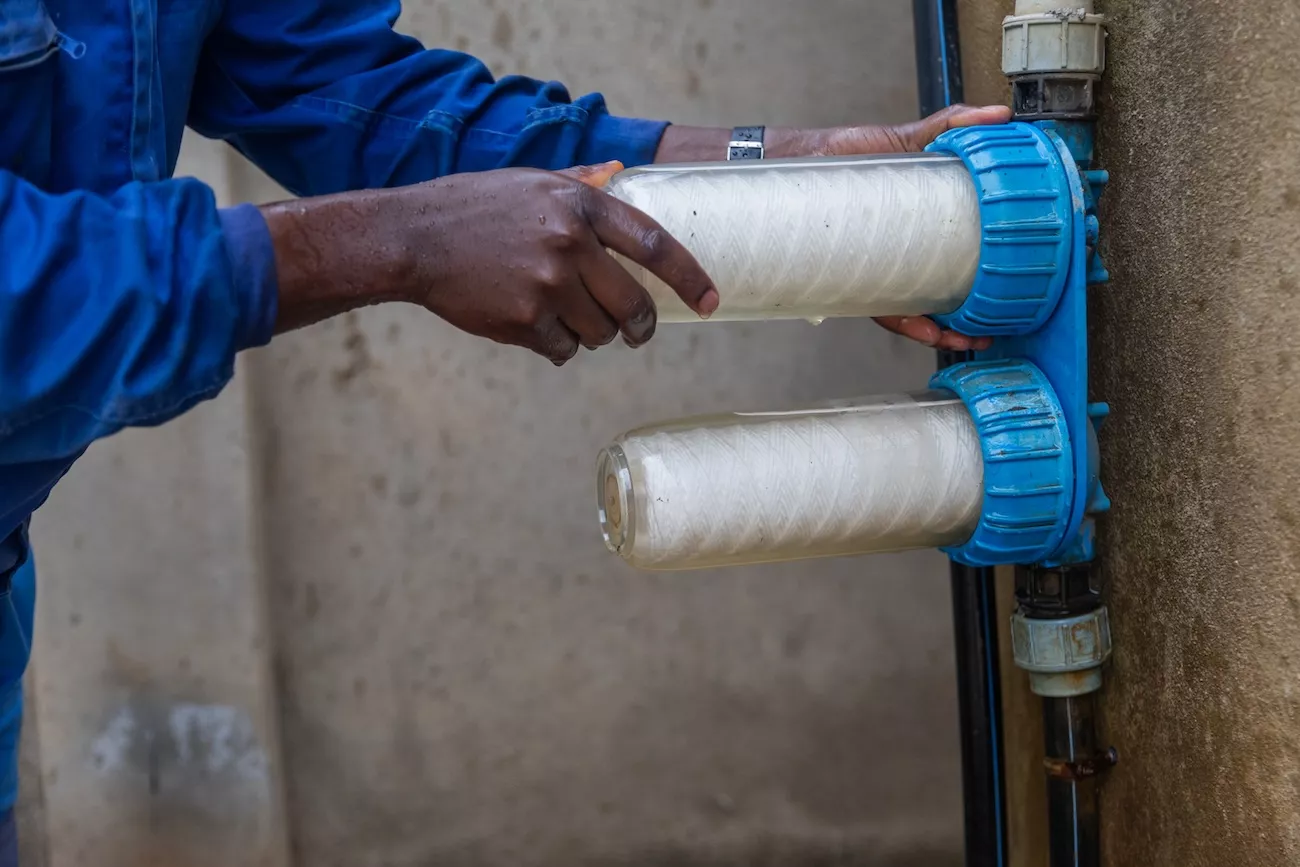
When a risk assessment identifies that microbiological sampling is required, water samples are collected from outlets, storage tanks, water heaters, and other high-risk points around the building. Those samples are then sent to a laboratory for analysis.
Under UK guidance, laboratories used for legionella testing must hold UKAS accreditation. This is not optional. Samples must also be collected and handled in accordance with BS 7592, the British Standard for legionella sampling methodology.
There are three main testing methods used in practice:
A qualified water hygiene specialist will advise on the right approach for your specific system and risk profile.
It is worth being clear on this, because it is often misunderstood. Not every element of a legionella control programme requires an external contractor. There are tasks that a properly trained, appointed responsible person can manage day to day.
These typically include:
The key phrase here is "properly trained". To manage these responsibilities competently, the appointed person needs a solid understanding of Legionella risk, ACoP L8 requirements, and correct recording procedures. L8 Protection's training and accredited courses are designed to give in-house teams exactly this grounding, so that day-to-day monitoring is carried out consistently and correctly.
That said, in-house management of routine monitoring tasks is not the same as having a compliant legionella programme. The wider picture requires professional input.
This is the part that catches many organisations out, particularly those that assume good intentions and a basic monitoring routine are sufficient. There are areas of legionella management where self-testing is not adequate, not legally sufficient, or both.
Where your risk assessment determines that microbiological sampling is needed, those samples must be analysed by a UKAS-accredited laboratory. There is no workaround for this. Consumer testing kits and non-accredited services do not satisfy the requirement under HSG274 and cannot be used as evidence of compliance.
Sampling itself must also follow BS 7592 methodology. Samples taken incorrectly, from the wrong points, or transported outside the required timescales can produce unreliable results and undermine the entire monitoring programme.
Receiving a Legionella test result is one thing. Knowing what to do with it is another. The required response varies significantly depending on the bacteria levels detected, the type of water system involved, and the wider context of your site.
If no legionella bacteria are detected, no immediate action is required, though your monitoring programme should continue as planned. A low-level detection below 100 CFU/L should not be ignored. The recommended response is to flush the relevant outlets, retest, and review your control measures, because Legionella is capable of rapid proliferation if the conditions are right.
Where results fall between 100 and 1,000 CFU/L, remedial works are required in line with HSG274. This means a thorough check of all water sources, a system flush, temperature checks, and a review of your risk assessment to determine whether water treatment is needed. At 1,000 CFU/L or above, the response becomes urgent. Immediate remedial action is required, which may include full system disinfection and a comprehensive reassessment of your water safety arrangements.
Knowing which threshold applies to your result is straightforward. Knowing what to do about it, in the specific context of your building, your occupants, and your water system, is where professional expertise is needed. Acting incorrectly on a positive result can be just as problematic as not testing at all.
This is a point that is often conflated with testing, but the two are distinct. A legionella risk assessment is a structured evaluation of your entire water system, identifying where bacteria could grow, how they could spread, and what control measures are needed. It is not the same as taking a water sample.
Under ACoP L8 and the Health and Safety at Work Act 1974, legionella risk assessments must be carried out by a competent person, meaning someone with the appropriate knowledge, training, and practical experience to identify hazards, evaluate risks, and recommend or implement effective controls. For most organisations, that means an external specialist.
Without a current, professionally conducted legionella risk assessment in place, any other legionella monitoring activity is essentially operating without a foundation. The risk assessment is the document that tells you what testing is needed, how often, and from which points in your system.
Some buildings carry an inherently higher legionella risk, and in those environments, the stakes of inadequate testing are significantly greater. Hospitals, hotels, schools, care homes, and leisure facilities all fall into this category, either because of the complexity of their water systems, the vulnerability of the people using them, or both.
In a hospital, an undetected Legionella problem can put immunocompromised patients at serious risk. In a hotel, the combination of large stored hot water systems, infrequently used rooms, and spa or pool facilities creates multiple potential growth points. In a school, extended holiday periods can result in water stagnation across dozens of outlets.
In all of these settings, self-management alone is not adequate. A professionally delivered, ongoing monitoring and testing programme is not a luxury; it is the minimum standard.
The regulatory picture for Legionella in the UK is clear. The key frameworks are:
Together, these frameworks make clear that where a risk assessment identifies a need for microbiological sampling, that sampling must follow BS 7592 methodology and be analysed by a UKAS-accredited laboratory. A duty holder who fails to meet these requirements risks HSE enforcement action, improvement notices, financial penalties, and in serious cases, prosecution.
It is also worth noting that the duty holder retains ultimate legal responsibility even when tasks are delegated to an in-house responsible person. If that person lacks the competence, time, or resources to manage the programme effectively, the consequences fall on the organisation, not just the individual.
A properly structured legionella management programme is not a single visit or a one-off test. It is an ongoing, documented relationship between your building and a qualified water hygiene specialist. At L8 Protection, our programmes are built around the specific needs of each site and include:
This is the difference between a compliant legionella programme and a reactive one. The organisations that face enforcement action are rarely those that were deliberately negligent. They are usually those who assumed routine monitoring was enough, or that a risk assessment from several years ago still applied.
Here is the direct answer.
Yes, if any of the following apply:
Possibly in-house, if all of the following are true:
If you are unsure which camp you fall into, that in itself is a strong signal that a professional conversation is overdue.
Legionella is not a risk that can be managed on good intentions alone. Whether you need a full legionella risk assessment, an ongoing monitoring and testing programme, or simply an expert opinion on where your current arrangements stand, the team at L8 Protection is here to help.
We work with organisations of all sizes across the UK, from single-site properties to large national portfolios, delivering water hygiene services that are practical, compliant, and built around the real demands of your building.
Get in touch with the L8 Protection team today to arrange your legionella risk assessment or discuss a monitoring programme tailored to your water systems.
.webp)
Interested?
Get in touch.

Where water safety meets peace of mind.